
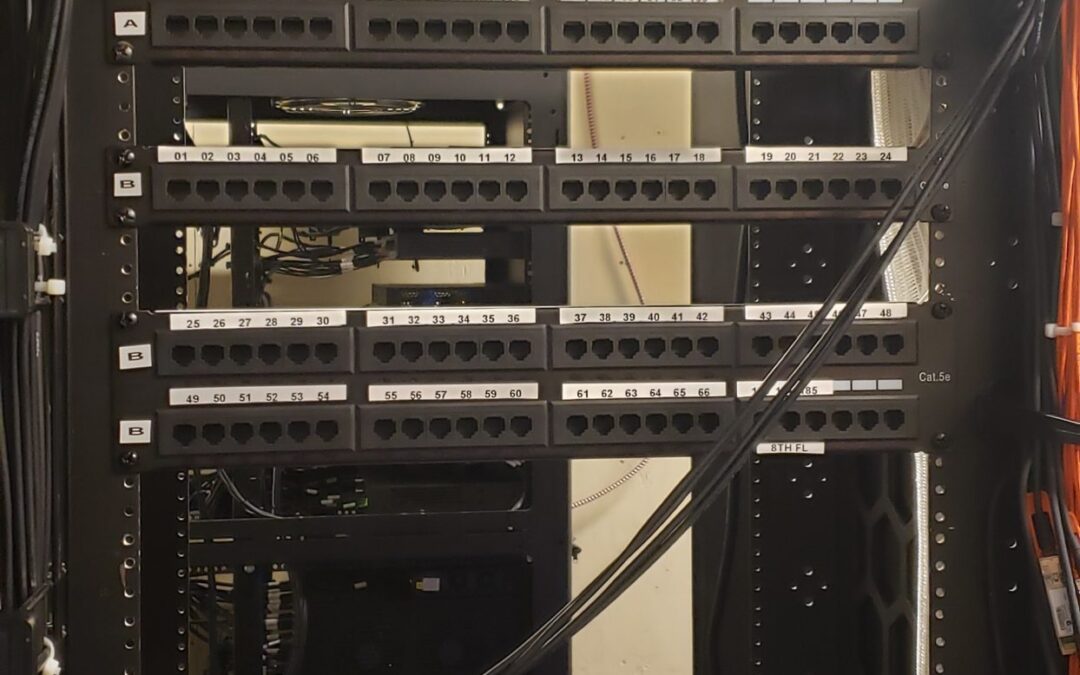
Many businesses invest heavily in network cabling, hardware, and security systems—but overlook one of the most valuable assets of all: network documentation. While documentation doesn’t directly move data or power devices, it plays a major role in reliability, uptime, and cost control for organizations nationwide.
At Progressive Cabling, we’ve seen firsthand how well-documented infrastructure saves time, reduces downtime, and prevents expensive mistakes as businesses grow and evolve.
What Is Network Documentation?
Network documentation is the detailed record of how your physical network is built and connected. It typically includes:
- Cable routes and pathways
- Patch panel and port mappings
- Network closet layouts
- Fiber backbone diagrams
- Device connection details
- Labeling standards
- Test results and certifications
This information acts as a blueprint for your infrastructure, helping IT teams understand exactly how everything is connected.
Why Documentation Is Often Missing
In many buildings, networks grow over time without consistent recordkeeping. Moves, adds, and changes happen quickly, and documentation is skipped to save time. Over the years, this leads to:
- Unknown cable destinations
- Guesswork during troubleshooting
- Longer service calls
- Increased risk of accidental disconnects
- Higher labor costs for upgrades
Without documentation, even simple changes become complex.
Faster Troubleshooting and Less Downtime
When a connection fails, time matters. Without documentation, technicians must trace cables manually, unplug ports to test connections, or work through trial and error.
Proper documentation allows teams to:
- Identify affected circuits immediately
- Locate the correct port or panel quickly
- Isolate issues without disrupting other systems
- Restore service faster
This can significantly reduce downtime and productivity loss.
Safer Changes and Upgrades
Every network change carries risk. Without clear records, disconnecting the wrong cable can take down critical systems such as cameras, access control, or VoIP phones.
Accurate documentation ensures:
- Changes are made intentionally
- Critical connections are protected
- Expansions don’t disrupt existing services
- Multiple vendors can work safely in the same environment
This is especially important for organizations with frequent upgrades or multiple service providers.
Supporting Growth and Scalability
As businesses expand—adding employees, devices, or locations—documentation becomes even more valuable. Knowing what capacity exists and where it’s available helps organizations plan intelligently.
Documentation supports:
- Faster deployment of new workstations
- Easier integration of new technology
- Better use of existing cabling
- Reduced need for unnecessary rework
Growth becomes predictable instead of chaotic.
Essential for Security and Compliance
Many industries require detailed records of infrastructure for compliance and audits. Network documentation helps demonstrate:
- Proper system separation
- Secure device connections
- Controlled access points
- Organized and compliant cabling
For security systems, documentation is critical during investigations, audits, or incident response.
Simplifying Vendor and IT Transitions
Staff changes and vendor turnover are inevitable. When knowledge exists only “in someone’s head,” it leaves with them.
Documentation ensures:
- Smooth IT transitions
- Faster onboarding of new technicians
- Consistent service quality
- Reduced dependency on specific individuals
This protects the organization long-term.
What Good Documentation Looks Like
Effective network documentation is:
- Clear and easy to understand
- Updated after changes
- Labeled consistently
- Accessible to authorized teams
- Organized by location and system
It doesn’t need to be complicated—just accurate and maintained.
Why Professional Cabling Documentation Matters
While some documentation can be done internally, professional cabling teams document infrastructure as it’s installed, ensuring accuracy from day one.
At Progressive Cabling, documentation is part of our process. We provide:
- Labeled cabling and ports
- Patch panel and rack mapping
- Fiber and copper pathway details
- Testing and certification results
- Clean, organized network closets
This gives businesses confidence that their infrastructure is understandable and manageable.
Industries That Benefit Most from Documentation
Network documentation is especially valuable for:
- Corporate offices and campuses
- Warehouses and logistics facilities
- Healthcare and medical organizations
- Educational institutions
- Retail and hospitality chains
- Multi-tenant commercial buildings
In environments with constant change, documentation becomes a competitive advantage.
Build Infrastructure That’s Easy to Manage
Your network shouldn’t be a mystery. Clear documentation turns complex infrastructure into a manageable asset, saving time and money for years to come.
If your organization is planning upgrades, expansions, or simply wants better control over its network, documentation should be part of the solution.
Contact Progressive Cabling today to learn how professional network documentation can support reliable, scalable infrastructure for your business nationwide.