
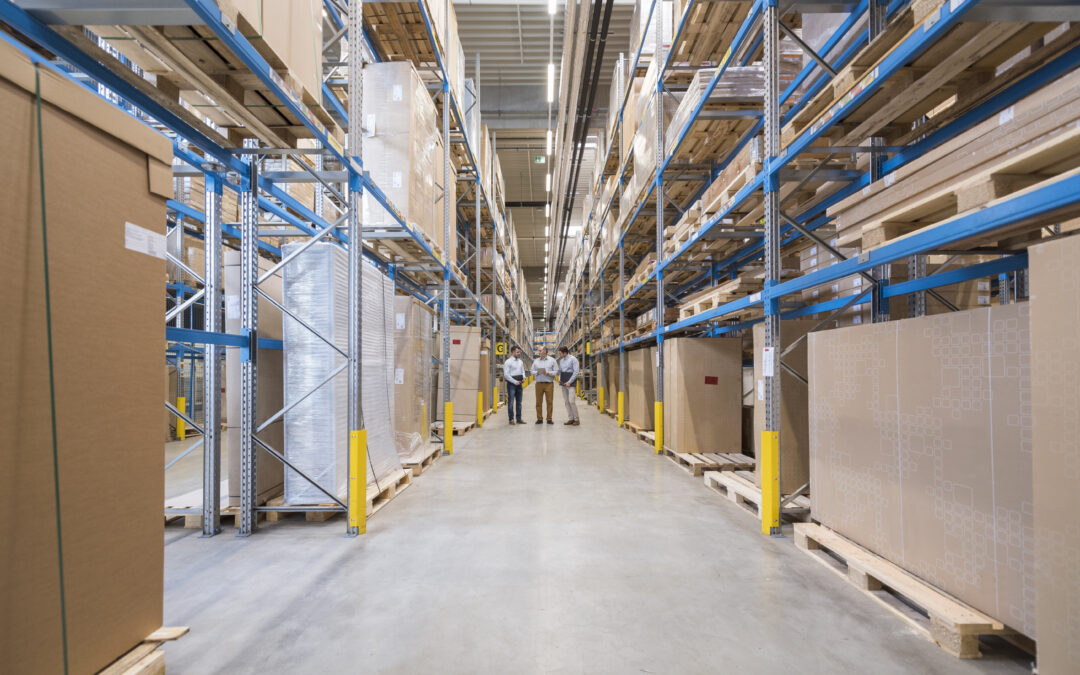
Atlanta is one of the Southeast’s most important logistics and distribution markets. Warehouses throughout Metro Atlanta rely on wireless scanners, inventory platforms, security cameras, shipping stations, access control, and other connected technology to keep products moving.
Behind all of those systems is something that often receives much less attention: the network cabling infrastructure.
A warehouse network must provide reliable connectivity across large spaces while supporting equipment located hundreds of feet apart. Poor cable planning can contribute to Wi-Fi problems, difficult expansions, disorganized network closets, and unnecessary downtime.
At Progressive Cabling, we provide professional warehouse network cabling in Atlanta, GA, including Cat6, Cat6A, fiber optic cabling, wireless access point cabling, security camera infrastructure, access control, and other commercial low-voltage solutions.
Why Warehouse Cabling Is Different from Office Cabling
Installing network cabling in a warehouse presents challenges that are very different from those found in a traditional office.
Warehouse environments can include:
- High ceilings
- Long cable distances
- Large open areas
- Metal storage racks
- Loading docks
- Industrial equipment
- Multiple network closets
- High numbers of wireless devices
These factors need to be considered before cable installation begins.
A professional cabling plan determines where devices will be located, how cables will travel through the facility, and whether additional IDFs or fiber backbone connections are required.
Cat6 Cabling for Atlanta Warehouses
Cat6 remains an excellent option for many warehouse network connections.
Cat6 data drops can support devices such as:
- Shipping computers
- Receiving stations
- Printers
- VoIP phones
- Security cameras
- Wireless access points
- Network-connected equipment
Instead of adding individual cables whenever a new device is installed, structured cabling creates an organized system that is easier to manage and expand.
When Should a Warehouse Use Cat6A?
Businesses planning higher-performance networks may want to consider Cat6A cabling.
Cat6A can support 10 Gigabit Ethernet over a full 100-meter channel when properly installed and provides additional performance headroom for demanding commercial environments.
It can be particularly valuable for:
- High-performance wireless access points
- Higher-bandwidth network connections
- Modern PoE deployments
- New warehouse construction
- Facilities planning for long-term technology growth
Progressive Cabling can evaluate the application and help determine whether Cat6 or Cat6A makes more sense for the project.
Fiber Optic Cabling for Large Atlanta Warehouses
One of the biggest challenges in warehouse networking is distance.
Copper Ethernet has distance limitations. In a large distribution center, connecting every device directly to a single network closet may not be practical.
A common solution is to create additional intermediate distribution frames and connect them using fiber optic cabling.
For example:
Main Network Room → Fiber Backbone → Warehouse IDF → Cat6/Cat6A → Devices
Fiber can provide high-capacity connectivity across the facility while copper cabling handles the final connection to access points, cameras, workstations, and other equipment.
Reliable Warehouse Wi-Fi Starts with Cabling
Wi-Fi is essential in many modern distribution environments.
Warehouse employees may depend on wireless connectivity for:
- Barcode scanners
- Tablets
- Handheld inventory devices
- Mobile computers
- Warehouse management systems
- Voice communication devices
When Wi-Fi performance is poor, productivity can suffer throughout the facility.
Adding random access points isn’t necessarily the solution.
Each commercial wireless access point requires properly planned placement and reliable wired backhaul. Cat6 or Cat6A cabling connects the access point to network switching equipment and can also provide Power over Ethernet when supported by the equipment.
The wired infrastructure behind the Wi-Fi should therefore be planned as carefully as the wireless network itself.
High Ceilings Make Professional Installation Important
Atlanta warehouses can have ceilings far higher than a typical commercial office.
Network cabling may need to travel through:
- Cable trays
- J-hooks
- Conduit
- Structural pathways
- Telecommunications rooms
Professional installation helps keep cabling properly supported, organized, and protected throughout the facility.
Planning pathways correctly also makes future additions easier.
Warehouse Security Camera Cabling
Large warehouses can require extensive surveillance coverage.
Common camera locations include:
- Loading docks
- Shipping areas
- Receiving areas
- Warehouse aisles
- Employee entrances
- Exterior doors
- Parking areas
- Inventory zones
- Building perimeters
Modern IP cameras frequently use Cat6 Ethernet cabling and Power over Ethernet.
For larger deployments, fiber may also be used to transport network traffic between network closets serving different sections of the facility.
Progressive Cabling can install the network infrastructure required to support commercial surveillance systems throughout Atlanta warehouses.
Access Control for Warehouse Facilities
Warehouses often have numerous exterior and interior doors, but not every employee should necessarily have unrestricted access to every area.
Commercial access control infrastructure can support:
- Card readers
- Keypads
- Door contacts
- Electronic locking hardware
- Request-to-exit devices
- Access control panels
Access control can be particularly useful around employee entrances, IT rooms, inventory areas, administrative offices, and other restricted locations.
Combining access control and camera infrastructure into the low-voltage plan can help create a more organized security installation.
Organize Your MDF and IDF Network Closets
Large warehouses frequently require multiple telecommunications spaces.
Keeping these locations organized is essential.
A professional network closet installation may include:
- Equipment racks
- Network cabinets
- Patch panels
- Fiber enclosures
- Horizontal cable management
- Vertical cable management
- Clearly labeled connections
An organized MDF or IDF makes troubleshooting easier and provides a better foundation for future expansion.
Upgrade Older Warehouse Cabling
Some Atlanta warehouses still contain cabling installed by previous tenants or during earlier generations of technology.
Businesses may encounter:
- Old Cat5 cabling
- Unused Cat5e
- Abandoned telephone wiring
- Unlabeled network runs
- Obsolete camera cabling
- Disconnected fiber
- Congested pathways
Before installing new infrastructure, businesses may benefit from removing unused cabling and evaluating what can safely remain.
Progressive Cabling provides commercial cabling demolition and abandoned cable removal in Atlanta in addition to new installations.
Plan Network Infrastructure Before Moving Into a Warehouse
If your company is moving into a new Atlanta warehouse, low-voltage infrastructure should be considered before operations begin.
Before move-in, businesses can plan:
- Data drop locations
- Wi-Fi access point cabling
- Fiber backbone connections
- Camera locations
- Access-controlled doors
- Network closets
- Future expansion capacity
Completing this work before racks, inventory, equipment, and employees fill the building can simplify installation and reduce disruption.
Industries That Depend on Warehouse Connectivity
Professional warehouse cabling can support businesses involved in:
- Distribution
- Logistics
- E-commerce
- Manufacturing
- Wholesale operations
- Food distribution
- Automotive parts
- Third-party logistics
- Retail fulfillment
As these facilities become increasingly automated and connected, reliable network infrastructure becomes even more important.
Atlanta Warehouse Cabling Services from Progressive Cabling
Progressive Cabling provides comprehensive commercial low-voltage services, including:
- Warehouse network cabling
- Cat6 installation
- Cat6A installation
- Fiber optic installation
- Fiber backbone cabling
- Wireless access point cabling
- Data drops
- Security camera cabling
- Access control infrastructure
- Card readers and keypads
- Network racks and cabinets
- Patch panel installation
- Cable testing and certification
- Cabling demolition
Whether you’re upgrading an existing warehouse or preparing an entirely new facility, we can build infrastructure around the requirements of the property.
Warehouse Cabling Throughout Metro Atlanta
Progressive Cabling supports commercial projects throughout Atlanta and Metro Atlanta, including:
- Atlanta
- College Park
- East Point
- Forest Park
- Union City
- Fairburn
- Lithia Springs
- Marietta
- Smyrna
- Kennesaw
- Norcross
- Duluth
- Alpharetta
- Roswell
- Surrounding Metro Atlanta commercial and industrial areas
Our network cabling solutions can support everything from smaller warehouse operations to large distribution facilities requiring multiple network closets and fiber connections.
Get a Quote for Warehouse Network Cabling in Atlanta, GA
Your warehouse depends on technology to keep employees, inventory, security systems, and operations connected. That technology is only as dependable as the infrastructure supporting it.
If you’re searching for warehouse network cabling in Atlanta, Atlanta Cat6 installers, Cat6A warehouse cabling, fiber optic installation for warehouses, warehouse Wi-Fi cabling, or an Atlanta low-voltage contractor, Progressive Cabling can help.
Contact Progressive Cabling today for a quote on warehouse network cabling in Atlanta, GA. From Cat6 and Cat6A to fiber optic backbones, wireless access points, security cameras, and access control, we can build the low-voltage infrastructure your facility needs to stay connected and ready for growth.