
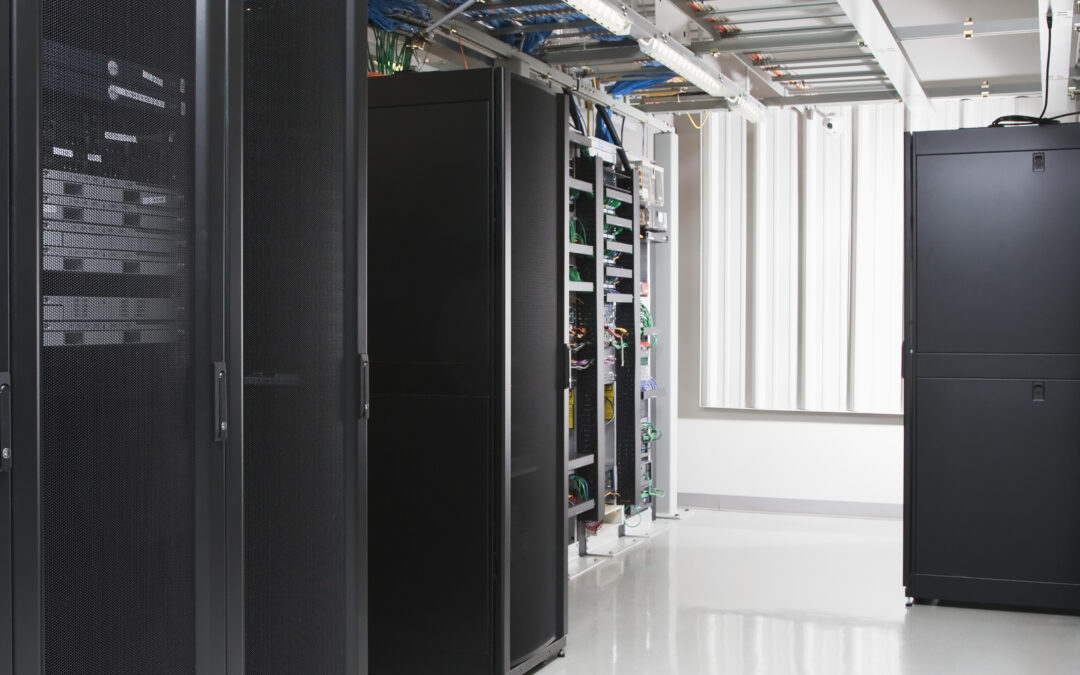
A commercial network is only as organized as the infrastructure supporting it. Businesses often focus on choosing Cat6, Cat6A, fiber optic cabling, security cameras, and wireless equipment, but there is another important part of a professional installation: how all of that cabling travels through the building.
In offices, warehouses, manufacturing facilities, and other large commercial properties, properly planned cable pathways can make network infrastructure cleaner, easier to maintain, and better prepared for future expansion.
At Progressive Cabling, we provide professional structured cabling and low-voltage infrastructure services in Atlanta, GA, including commercial cable pathways, Cat6, Cat6A, fiber optic cabling, network racks, wireless access point cabling, security camera infrastructure, and access control.
Why Cable Pathways Matter in Commercial Buildings
A large commercial facility can contain hundreds or even thousands of feet of low-voltage cabling.
These cables may connect:
- Employee workstations
- Wireless access points
- IP security cameras
- VoIP phones
- Printers
- Conference room technology
- Access control equipment
- Network closets
- Other connected devices
Without an organized pathway strategy, adding or replacing cabling can become increasingly difficult.
Professional cable support systems create defined routes for infrastructure throughout the building.
What Is a Commercial Cable Tray?
Cable tray is a support system designed to provide a pathway for cabling through a building.
Rather than having large groups of cables routed without an organized structure, tray systems can provide a dedicated path through appropriate areas of a commercial facility.
Depending on the building and project requirements, low-voltage pathways may incorporate cable tray, J-hooks, conduit, or a combination of different support methods.
The correct solution depends on the facility, cable quantity, environment, accessibility, and future expansion requirements.
Cable Tray for Atlanta Warehouses
Warehouses are excellent examples of buildings where pathway planning becomes extremely important.
A large Atlanta warehouse may require cabling across long distances for:
- Wireless access points
- Shipping stations
- Receiving stations
- Security cameras
- Offices
- Network equipment
- Access control systems
The facility may also have high ceilings and large open areas.
Establishing organized cable routes can simplify the process of distributing network infrastructure across the building while providing a more manageable foundation for future additions.
Supporting Cat6 and Cat6A Infrastructure
Commercial cable pathways can support large structured cabling installations involving Cat6 and Cat6A.
For example, an office renovation may require dozens of new data drops while a distribution center may require connections across several sections of the building.
A planned pathway provides a defined route between network rooms and device locations.
This becomes increasingly valuable as the number of Ethernet connections grows.
Plan Pathways for Wireless Access Points
Commercial Wi-Fi may appear wireless to employees, but the access points themselves still require wired infrastructure.
Large offices and warehouses can require numerous AP cable runs.
Proper pathway planning makes it easier to distribute Cat6 or Cat6A connections to access point locations throughout the facility.
This is particularly important in warehouses where APs may be installed high above operational areas and spread across a large footprint.
Security Camera Cable Pathways
Security cameras can add a significant number of low-voltage cable runs to a commercial property.
Camera infrastructure may extend to:
- Building entrances
- Parking areas
- Loading docks
- Hallways
- Warehouse aisles
- Shipping areas
- Exterior locations
- Restricted spaces
Planning surveillance cabling alongside the rest of the network can help avoid creating separate, disorganized routes every time a new security device is installed.
For larger properties, Progressive Cabling can also integrate fiber backbone infrastructure between network closets serving different areas.
Cable Tray and Fiber Optic Cabling
Fiber optic cabling is frequently used as a backbone between MDF and IDF network rooms, between floors, or across large facilities.
Protecting and organizing these routes should be considered during the infrastructure design.
A commercial network might use:
MDF → Fiber Backbone → IDF → Cat6/Cat6A → Connected Devices
A planned pathway system helps establish where these backbone and horizontal cables travel through the facility.
Cable Tray vs. Conduit
Cable tray and conduit can both play important roles in commercial low-voltage installations, but they serve different applications.
Conduit provides an enclosed pathway and may be useful where cables require additional physical protection or where the building design calls for it.
Cable tray provides an accessible support pathway that can be advantageous for larger quantities of cabling and environments where future additions are expected.
Many commercial projects use multiple pathway types depending on where cabling is being installed.
The goal should be to select the appropriate pathway for each part of the building rather than forcing one solution everywhere.
Make Future Network Expansion Easier
One of the biggest advantages of organized pathways is scalability.
Imagine an Atlanta warehouse that initially needs 30 security cameras and 15 wireless access points. Several years later, the company expands operations and needs additional cameras, access points, and network-connected equipment.
If pathways were planned with growth in mind, adding new infrastructure can be much more manageable.
Businesses should consider future requirements during the initial installation rather than planning only for today’s cable count.
Pathway Planning During Commercial Buildouts
New construction and tenant buildouts provide an ideal opportunity to establish low-voltage pathways before a building is occupied.
Businesses should consider network infrastructure during planning for:
- New Atlanta offices
- Warehouse buildouts
- Manufacturing facilities
- Tenant improvements
- Commercial renovations
- Facility expansions
Coordinating pathways before ceilings and finished spaces are complete can reduce the need for more complicated retrofit work later.
Avoid the Problems of Unsupported Cabling
Low-voltage cabling should not simply be laid across ceilings or supported by unrelated building systems.
A professional structured cabling installation considers how cables are properly supported and routed throughout the property.
Good pathway management can also help keep cabling separated, accessible, and organized.
The result is infrastructure that is easier for IT teams and future technicians to understand.
Clean Up Old Cabling Before Building New Pathways
Older Atlanta buildings may already have years of unused cabling above ceilings and throughout telecommunications spaces.
Before installing new infrastructure, businesses may benefit from evaluating abandoned:
- Cat5 cabling
- Cat5e cabling
- Telephone wiring
- Security camera wiring
- Access control cabling
- Other obsolete low-voltage cables
Removing unnecessary infrastructure can create a cleaner environment for new cable pathways and structured cabling.
Progressive Cabling provides commercial cabling demolition and abandoned cable removal in Atlanta in addition to new installations.
Connect Cable Pathways to Organized Network Rooms
Cable pathways should eventually lead to professionally organized telecommunications spaces.
An MDF or IDF may include:
- Network racks
- Patch panels
- Fiber enclosures
- Cable management
- Labeled terminations
- Network equipment
Combining organized pathways with clean network rooms creates a structured system from the device location all the way back to the network core.
Atlanta Commercial Cabling Services from Progressive Cabling
Progressive Cabling provides commercial low-voltage infrastructure solutions including:
- Commercial cable pathway planning
- Structured cabling
- Cat6 installation
- Cat6A installation
- Fiber optic cabling
- Fiber backbone installation
- Data drops
- Wireless access point cabling
- Network racks and cabinets
- Patch panels
- MDF and IDF infrastructure
- Security camera cabling
- Access control infrastructure
- Cable testing and certification
- Cabling demolition
Our services can support both new commercial construction and upgrades to existing facilities.
Serving Atlanta and Metro Atlanta
Progressive Cabling supports commercial network cabling projects throughout Atlanta and Metro Atlanta, including:
- Downtown Atlanta
- Midtown Atlanta
- Buckhead
- Sandy Springs
- Dunwoody
- Marietta
- Smyrna
- Kennesaw
- Roswell
- Alpharetta
- Norcross
- Duluth
- Decatur
- East Point
- College Park
- Surrounding Metro Atlanta areas
Whether you’re building a new office, upgrading a warehouse, or expanding an industrial facility, properly planned pathways can provide a better foundation for your low-voltage infrastructure.
Get a Quote for Commercial Network Cabling in Atlanta, GA
Professional network infrastructure is about more than selecting the right cable. The pathways supporting those cables can affect how organized, accessible, and expandable the entire system becomes.
If you’re searching for commercial cable tray installation in Atlanta, low-voltage cable pathways, structured cabling in Atlanta, Cat6 or Cat6A installation, fiber optic cabling, or an Atlanta commercial cabling contractor, Progressive Cabling can help.
Contact Progressive Cabling today for a quote on commercial structured cabling and low-voltage infrastructure in Atlanta, GA. From organized cable pathways and network rooms to Cat6, Cat6A, fiber, cameras, and access control, we can help build an infrastructure designed for long-term growth.